What're You Doing for Lent?

  1. Share
14 10

There's a holiday song that I love, but which, I think, always gets lost in the holiday shuffle. The song goes like this:

Maybe it's much too early in the game Ah, but I thought I'd ask you just the same What are you doing New Year's, New Year's eve?

Wonder whose arms will hold you good and tight When it's exactly twelve o'clock that night Welcoming in the New Year, New Year's Eve?

This year, as we prepare for the Lenten season, that song is on repeat in my head.

Maybe I'm crazy to suppose, as the song goes, but I can hear God asking me:

What're you doing for Lent? For Lent this year?

You see, the original song is a love song. The singer is asking someone--his beloved--what she's doing on New Year's, and whether he can spend the evening with her, and whether he'll be given the chance to give her a kiss at midnight. He wants to know if she will choose him, and show him how much she loves him.

For Lent, God is looking at us--His beloveds--and wondering, what we will do this Lenten season to show Him how very much we love Him?

That's what Lent is about, isn't it? Loving God, with all our hearts and minds, and loving our neighbor as ourselves.

How will we do that this year?

For decades, we've chosen a variety of things to give up. Food always seems to top the list. As we mature spiritually, we start adding devotions--an additional rosary, the Divine Mercy Chaplet, or the Sorrowful Mother Rosary, perhaps.

After a while, you start to realize that, maybe, it's best to ask God what he wants you to do for Lent. He knows best, after all. He knows what we need to do to grow closer to Him.

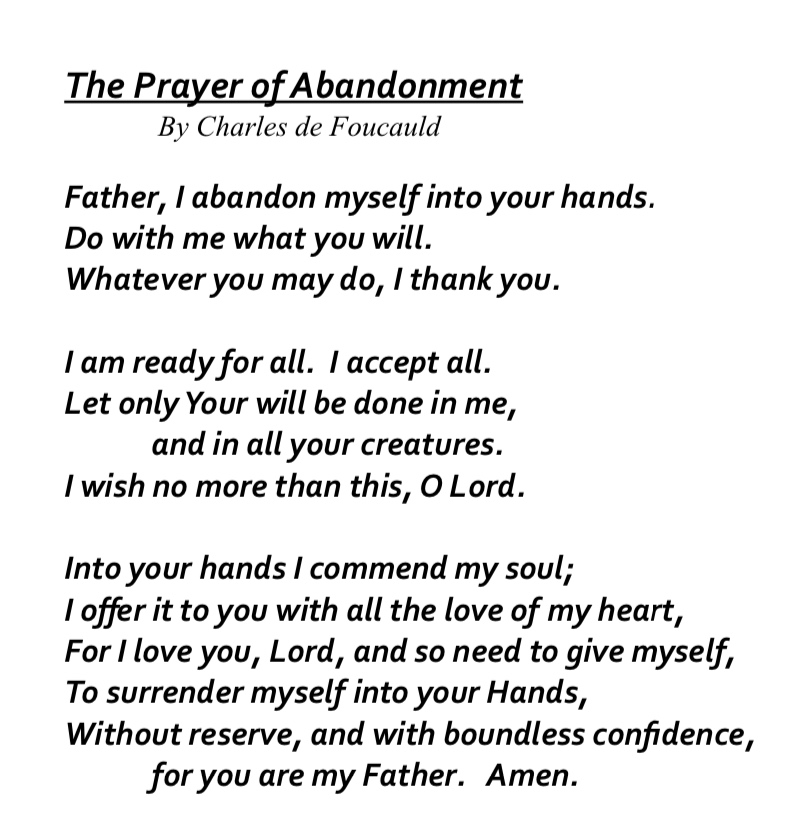
The best place to start, when we seek to do His will, is to abandon our own.

How does that look?

Instead of giving up something tangible, we will strive to accept what God gives us, every minute of every day, and CHOOSE to respond in LOVE.

Choose Love.

This past Sunday, God gave us a roadmap in the readings from both the Traditional and Novus Ordo Masses.

In the Traditional calendar, Quinquagesima Sunday, we are given a roadmap for doing God's will.

The Introit begins by reminding us where our strength lies--in God, our rock of refuge. We can't count on our own strength to do this. He, alone, can rescue us.

Ps 30:3-4
Be my rock of refuge, O God, a stronghold to give me safety. You are my rock and my fortress; for Your name’s sake You will lead and guide me.
Ps 30:2
In You, O Lord, I take refuge; let me never be put to shame. In Your justice rescue me and deliver me.

In the Collect and Gradual, we acknowledge that it is only God who can save us from the captivity of sin:

O Lord, we beseech You, mercifully hear our prayers; loose us from the chains of our sins and keep us from all adversity.

Ps 76:15-16
You are the God Who alone works wonders; among the peoples You have made known Your power.

Then, we get to the Epistle, 1 Corinthians 13.

Charity is patient, is kind; charity does not envy, is not pretentious, is not puffed up, is not ambitious, is not self-seeking, is not provoked; thinks no evil, does not rejoice over wickedness, but rejoices with the truth; bears with all things, believes all things, hopes all things, endures all things. Charity never fails, whereas prophecies will disappear, and tongues will cease, and knowledge will be destroyed.

For those seeking to do God's will, here is the perfect To Do list. Incorporate this into your Plan of Love, and you're well on your way.

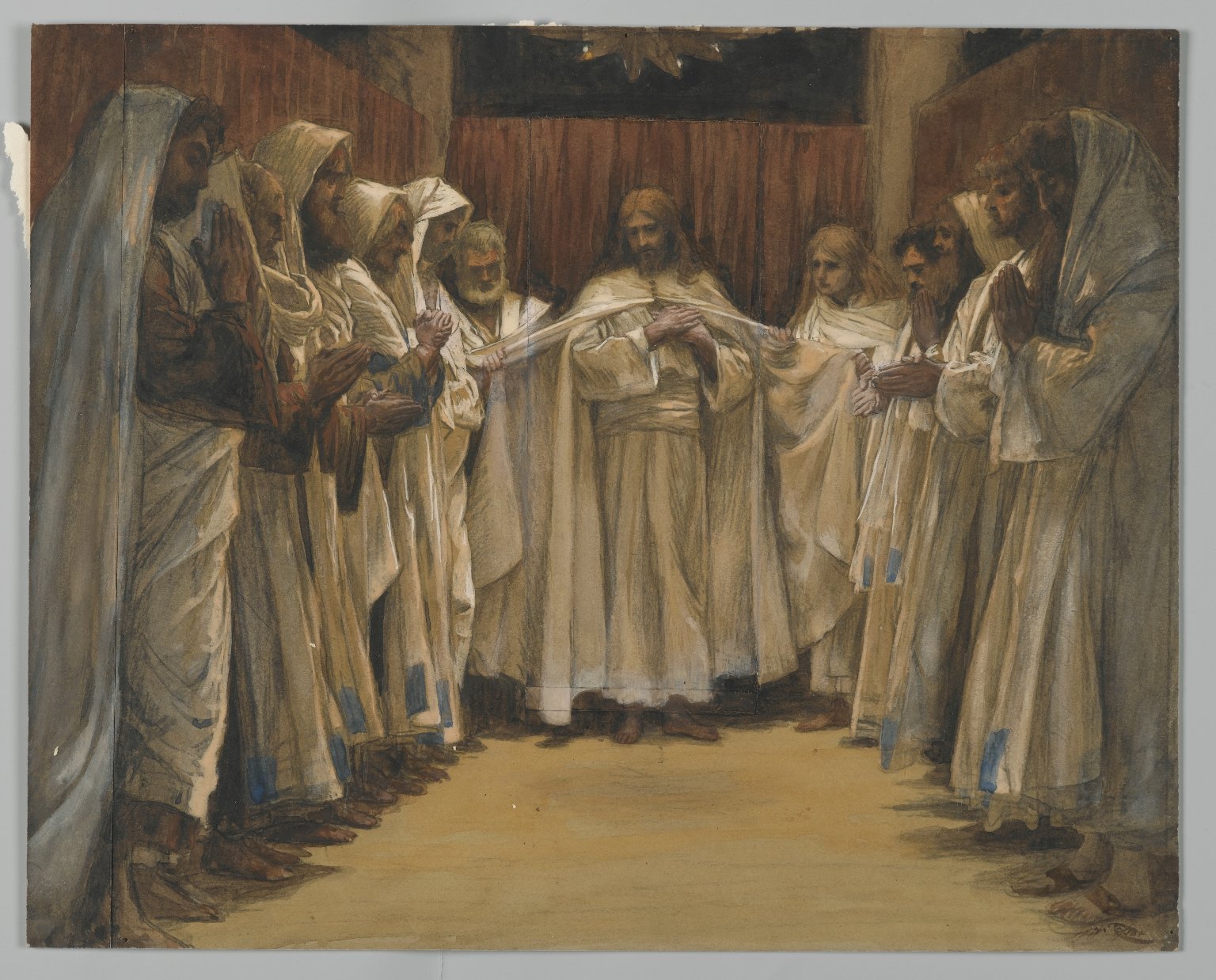
The Gospel reminds us that none of this will be easy. Even after three years of walking with Him, the Apostles didn't comprehend what he was telling them. (So we must go easy on ourselves when we fail!)

Luke 18:31-43
At that time, Jesus taking to Himself the Twelve said to them, Behold, we are going up to Jerusalem, and all things that have been written by the prophets concerning the Son of Man will be accomplished. For He will be delivered to the Gentiles, and will be mocked and scourged and spit upon; and after they have scourged Him, they will put Him to death; and on the third day He will rise again. And they understood none of these things and this saying was hidden from them, neither did they get to know the things that were being said.

He tells us to follow Him, and that always leads to the Cross.

So does self-denial. Dying to self. Abandonment of one's will.
Think of how often you wish life were different. You wish the guy in front of you (or behind you) would drive the speed limit. You wish this line weren't so long. You wish that person wasn't so rude, or that other person so annoying. 

When we don't accept the life and circumstances presented to us, every day, we are missing out on the opportunity to do God's will in every little thing. And we have oh, so many opportunities.

One person who refused to pass up an opportunity to see the face of Christ was the blind man at the wayside on the road to Jericho, in the Gospel mentioned above. He heard Jesus coming, and He was determined to not let Him pass him by. He shouted, and everyone told him to be quiet. 

But he cried out all the louder,

Son of David, have mercy on me!

Then Jesus stopped and commanded that he should be brought to Him. And when he drew near, He asked him, saying,

What would you have Me do for you?

And he said,

Lord, that I may see.

And Jesus said to him,

Receive your sight, your faith has saved you.

Your FAITH has saved you.
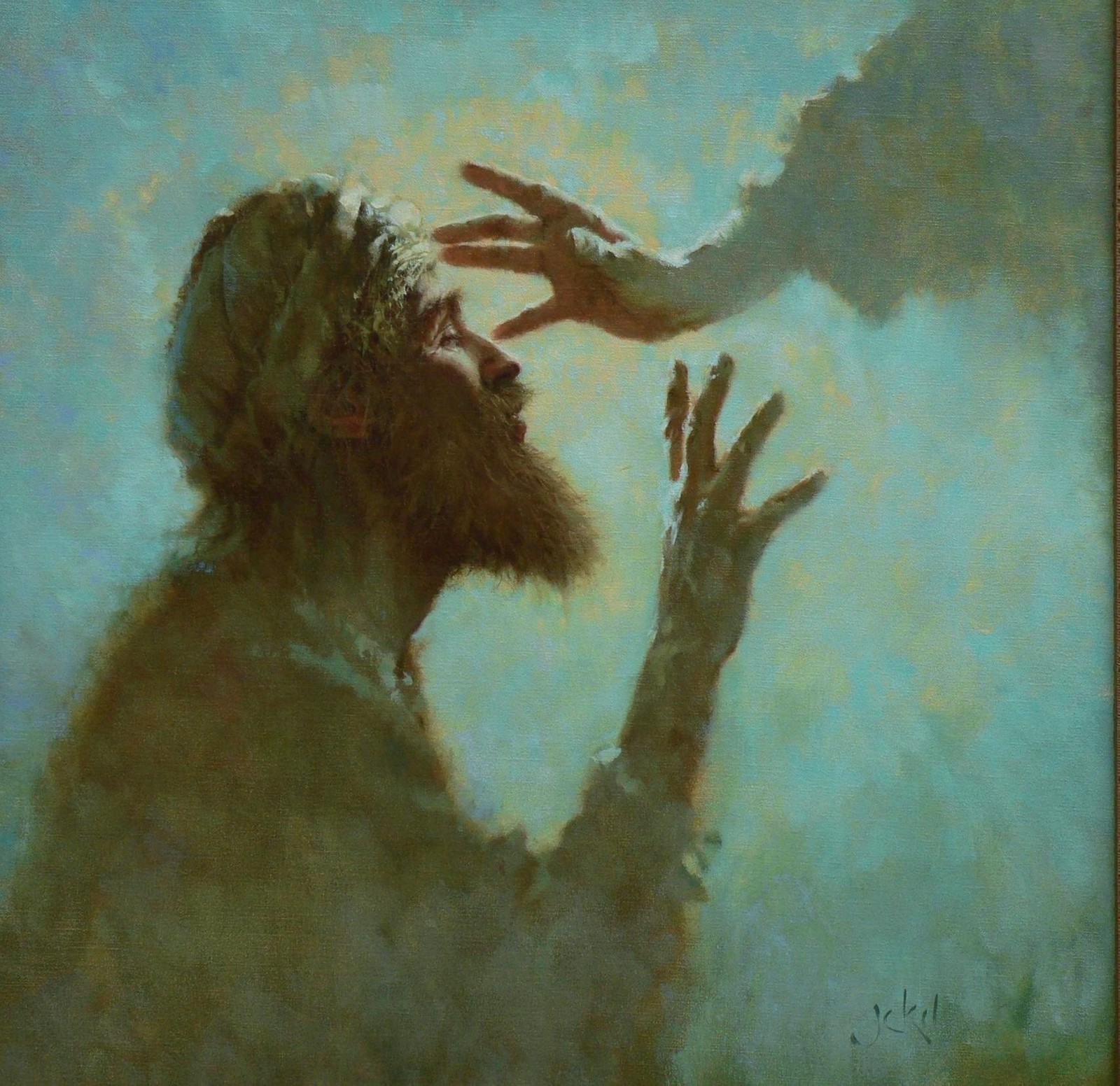
Do you believe that God will heal you this Lent?

The Novus Ordo readings for the Seventh Sunday in Ordinary Time were just as apropos. In the first reading, the Lord tells Moses:

"Speak to the whole Israelite community and tell them:
Be holy, for I, the LORD, your God, am holy.

"You shall not bear hatred for your brother or sister in your heart.
Though you may have to reprove your fellow citizen,
do not incur sin because of him.
Take no revenge and cherish no grudge against any of your people.
You shall love your neighbor as yourself.
I am the LORD."

The Responsorial Psalm reminds us that the Lord, who tells us to pick up our crosses and follow Him, is kind and merciful.

Are we kind and merciful?

The second reading gives us a warning:

Let no one deceive himself.
If any one among you considers himself wise in this age,
let him become a fool, so as to become wise.

And the Gospel, 

"You have heard that it was said,
You shall love your neighbor and hate your enemy.
But I say to you, love your enemies
and pray for those who persecute you,
that you may be children of your heavenly Father,
for he makes his sun rise on the bad and the good,
and causes rain to fall on the just and the unjust.
For if you love those who love you, what recompense will you have?
Do not the tax collectors do the same?
And if you greet your brothers only,
what is unusual about that?
Do not the pagans do the same?
So be perfect, just as your heavenly Father is perfect."


The overarching theme of ALL of these readings, and of Jesus' ministry, is 

LOVE.
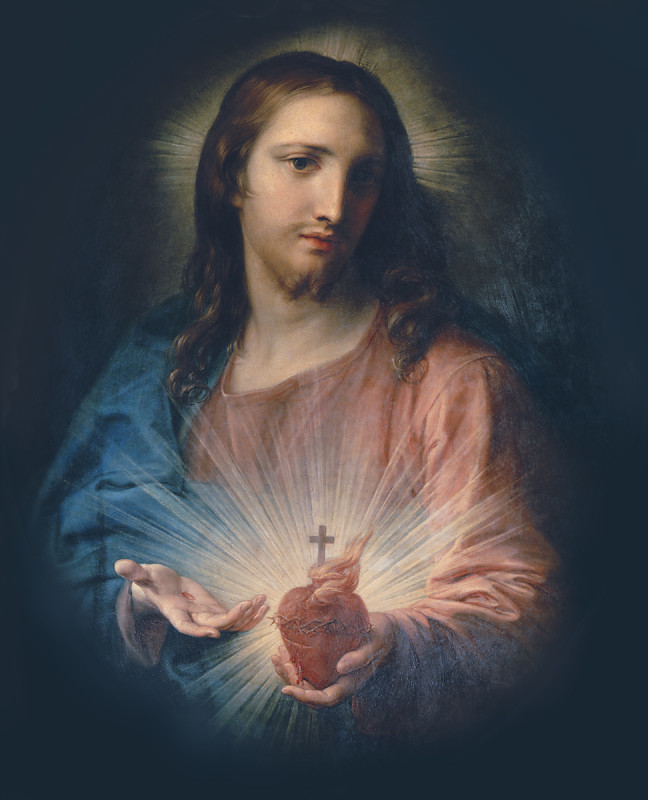
So, what are you doing for Lent this year?

Will it help you to LOVE as Christ calls us to do?

We have so, so many opportunities--not just one kiss at midnight--to show our Beloved how very much we love Him, and to give him our hearts.

And because He is God, He will give us what we need to do what He wants us to do.


Images: Pixabay, The Last Sermon of Our Lord (Dernier Sermon de Notre-Seigneur) by James Tissot; Jesus healing the Blind Man, by Brian Jekel (used with permission), © Brian Jekel Artist; Sacred Heart of Jesus by Pompeo Batoni (public domain); pixabay


Community tags

This content has 0 tags that match your profile.

Virtues and Ethics

Comments

To view comments or leave a comment, login or sign up.

Related Content

147
In the Desert with Jesus and Mary
Today, we begin our journey following Jesus into the desert.   Can you imagine?   He was just baptized in the Jordan, when, suddenly, the Holy Spirit led Him into the desert. He looks back and beckons. Not with His hands. Just a look.   Come.   We set out, uncertain, but not entirely.  We know Who we're following, after all. We trust Him. We thank God for Septuagesimatide. It's nice to prepare for an outing like this. But there is no other outing like this. How can we prepare? By shutting our minds to the distractions. By pulling away from the world. By centering ourselves in Him.   The walk through the desert is arduous. The sun is hot. We knew this walk wouldn't be easy. But God has a way of making His yoke manageable. Thank Him for the breeze that cools the brow. The farther we move, the quieter it becomes.  There are no birds here to sing.  It's so quiet, you can almost hear the sun sizzling in the sky. The sand baking. The sound of sandals dig, dig, dig into the sand. The walk itself becomes meditative. The sound of our feet has a rhythm that quiets the mind. We are going deep into the heart of God's creation to find Him there; Him and nothing more.  What more could we ever need? What more could we ever want? Our Lord is there, waiting for us.   Imagine. We leave behind the notifications, tings, rings, beeps and boops. Leave behind the music that bores itself into our consciousness and haunts our subconscious; the videos and tv shows that usurp valuable chunks of our memories with less-than-holy images and ideas.  Here in the desert, we don't need to, nay, we can't even concern ourselves with what we're going to eat. There's no food here to obsess over or gorge on mindlessly. Here, we must rely on Our Heavenly Father to feed us with the sweet bread of everlasting life. Gone are the comfy and soft blankets and pillows that cushion our comfortable lives. Gone are the heaters and fans and air conditioners that keep us all at a comfortable level of temperature.  Why are we so afraid of being uncomfortable? This walk isn't that bad. We are at the mercy of God now. In the desert. His mercy is everlasting.   A dark night of the senses. Forty of them. We shut them down to hear Him better. To follow Him better. Leave behind the baggage of the senses, of the memory, and the wounds and scars. Follow Him into the desert. Will you?   But without all that baggage we carry around each day...  What do we do with our time? What do we do with our memories? Our monkey thoughts?   We focus. Focus them on God. Focus on His will. On His word. What a simple time.   Can you see it? Can you imagine?   Our Lady has joined us in the desert, as well, but her retreat is spiritual. She is with Jesus in her mind, in her heart. She is always close to Him. Watching. Praying. Our Lady of Silence. She speaks only when necessary, so that she can better hear the promptings of the Holy Spirit. She holds all things in her heart. All things worth keeping, that is. Her heart has no room for anything that is not of God. Why do ours? Why do we make room for anything else?   She knows the journey that we're on and she prays for us. She knows, in the desert, we will be closer to Him than ever before.   Let us ask for her help as we make our way and follow the only Leader we should ever know. Let us ask the Father...   Loving Father, I seek nothing more than to please You and grow closer to You. Purify my heart and my intentions this Lent, Heavenly Father. Bring me closer to You, to Your Son. Prepare a place in my heart and home for silence and solitude, so I can hear Your voice and know Your will for me. Help me fast from the things that threaten the health of my soul and body, which keep me attached to this world, and which create noise to prevent me from hearing and knowing You. Enlarge my heart so I can be generous, like Zacchaeus. Open my eyes, so I can see, like Bartimaeus. Open my ears, like you did for the deaf man. Heal me, like You healed the paralytic. Dispel the demons that surround me, as you did for the Gerasene. Bring me back from death, as You did to Lazarus. I seek nothing but Your will, Lord. I know that I can do all things in You.     Image: Christ in the Wilderness, by Ivan Kramskoy (c. 1872, public domain), with icon of Our Lady of Silence (artist unknown)
122
Septuagesima: Exile and Buried Alleluias
The Symbolic Seventy In the traditional Roman calendar, this Sunday is called Septuagesima, which is Latin for "Seventieth". While not exactly 70 days before Easter—it's actually 63—the number is symbolic, representing the 70 years of exile the Israelites spent captive in Babylon after Solomon's Temple was destroyed after the Jewish-Babylonian War. The three Sundays of the Septuagesima season— Septuagesima, Sexagesima ("sixtieth") and Quinquagesima ("fiftieth")—are all named from their numerical reference to Lent, which is called Quadragesima ("fortieth"). The 40 days of Lent—which, again, end up being 46 days—are symbolic of the 40 days Jesus spent in the desert before He began His public ministry. Septuagesima is considered a pre-Lenten opportunity to get our spiritual ducks in a row and prepare ourselves mentally and spiritually for the (hopefully) earnest sacrifices and repentance that Lent brings. Or, rather, used to bring. Obligatory Lenten sacrifices got notoriously more lenient after Vatican II, which also did away with the entire season of Septuagesima, sadly. But nothing says we can't kick our spiritual practices up a notch and dive head first into this penitential season with gusto. In fact, "con gusto"  in Spanish literally means "with pleasure", and isn't that how we do things for our Beloved Lord? We practice mortification, sacrifice, and ascesis with pleasure for the One we love. As Dom Prosper Gueranger says in The Liturgical Year,  The words Quinquagesima, Sexagesima, and Septuagesima, tell us of the same great Solemnity as looming in the distance, and as being the great object towards which the Church would have us now begin to turn all our thoughts, and desires, and devotion. Now, the Feast of Easter must be prepared for by a forty-days’ recollectedness and penance. Those forty-days are one of the principal Seasons of the Liturgical Year, and one of the most powerful means employed by the Church for exciting in the hearts of her children the spirit of their Christian Vocation. It is of the utmost importance, that such a Season of grace should produce its work in our souls, — the renovation of the whole spiritual life. The Church, therefore, has instituted a preparation for the holy time of Lent. She gives us the three weeks of Septuagesima, during which she withdraws us, as much as may be, from the noisy distractions of the world, in order that our hearts may be the more readily impressed by the solemn warning she is to give us, at the commencement of Lent, by marking our foreheads with ashes. Babylon and Jerusalem There are two times: one which is now, and is spent in the temptations and tribulations of this life; the other which shall be then, and shall be spent in eternal security and joy. In figure of these, we celebrate two periods: the time ‘before Easter,’ and the time ‘ after Easter.’ That which is ‘ before Easter,’ signifies the sorrow of this present life; that which is ‘after Easter’ the blessedness of our future state. Hence it is, that we spend the first in fasting and prayer; and in the second, we give up our fasting, and give ourselves to praise.” --St Augustine, Enarrations; Psalm clviii According to the tradition and teaching of the Church, the interpreter of the Sacred Scriptures, these two times of St. Augustine correspond to two places: Babylon and Jerusalem. Dom Prosper Gueranger explains: Babylon is the image of this world of sin, in the midst whereof the Christian has to spend his years of probation; Jerusalem is the heavenly country, where he is to repose after all his trials. The people of Israel, whose whole history is but one great type of the human race, was banished from Jerusalem and kept in bondage in Babylon. Now, this captivity, which kept the Israelites exiles from Sion, lasted seventy years; and it is to express this mystery, as Alcuin, Amalarius, Ivo of Chartres, and all the great Liturgists tell us, that the Church fixed the number of Seventy for the days of expiation. ... We are sojourners upon this earth; we are exiles and captives in Babylon, that city which plots our ruin. If we love our country, — if we long to return to it, — we must be proof against the lying allurements of this strange land, and refuse the cup she proffers us, and with which she maddens so many of our fellow captives. She invites us to join in her feasts and her songs; but we must unstring our harps, and hang them on the willows that grow on her river’s bank, till the signal be given for our return to Jerusalem. (Psalm 115) She will ask us to sing to her the melodies of our dear Sion: but, how shall we, who are so far from home, have heart to ‘sing the Song of the Lord in a strange Land’? (Psalm 136) No, there must be no sign that we are content to be in bondage, or we shall deserve to be slaves for ever. These are the sentiments wherewith the Church would inspire us, during the penitential Season, which we are now beginning. She wishes us to reflect on the dangers that beset us, dangers which arise from our own selves, and from creatures. During the rest of the year, she loves to hear us chant the song of heaven, the sweet Alleluia; but now, she bids us close our lips to this word of joy, because we are in Babylon. We are ‘pilgrims absent from our Lord’ (2 Cor 5:6); let us keep our glad hymn for the day of his return. We are sinners, and have but too often held fellowship with the world of God’s enemies; let us become purified by repentance, for it is written that ‘praise is unseemly in the mouth of a sinner’. (Ecclesiasticus 15:9) Burying the Alleluia One of the ancient practices that coincided with Septuagesima was the burying of the Alleluia. People literally buried the printed word, "Alleluia". We in Apostoli Viae are reviving this beautiful practice, a symbolic act tied to a spiritual reality. Today at our headquarters, the Our Lady of Mount Carmel Retreat center, there will be prayer and the burying of the Alleluia at the beginning place of the stations of the cross. All faithful Catholics and all professed to Apostoli Viae are encouraged to take up this practice. You can find a sign maker on Etsy to make you one out of metal (wood deteriorates too quickly underground - especially in rainy Alabama), or you can make your own. This can be especially beautiful, coupled with a family activity of teaching with children. "Alleluia" is last sung at First Vespers of Septuagesima. We don't hear it at all during Lent until The Easter Vigil on Holy Saturday. Why? Because we are going into exile... as we read in Psalm 137: By the rivers of Babylon—  there we sat down and there we wept when we remembered Zion. On the willows there  we hung up our harps. For there our captors  asked us for songs, and our tormentors asked for mirth, saying,  “Sing us one of the songs of Zion!” How could we sing the LORD’s    song in a foreign land? If I forget you, O Jerusalem,  let my right hand wither! Let my tongue cling to the roof of my mouth,  if I do not remember you, if I do not set Jerusalem  above my highest joy. Although the word "Alleluia" means "praise the Lord", and we can and should praise the Lord in all times of our lives—no matter if they be happy or sad, difficult or carefree—the Church has deemed it appropriate to bury the Alleluia during the Septuagesima and Lenten season so that when we celebrate the Resurrection, the sound of the Alleluia rings in our ears with a joy appropriate for the occasion. How can we sing the Lord's song in a foreign land?   So many feel that Lent comes quickly and ends in a flash, giving them barely time to give any thought to their Lenten practices and mortifications. This blessed season of Septuagesima gives us that and so much more. It sets a somber, mournful scene, gives us time to enter into the penitential spirit of the Church, to grow in holy fear of God, think on our sins and how we have hurt the One who loves us most, recognize our need for His mercy, and give thanks for the gift that is our salvation, brought about by the spilling of His Sacred Blood. This holy season reminds us that this world is not out home, that we, too, are exiles in a vale of tears, and that, someday, we hope to join our Lord in the New Jerusalem, where we can sing the Lord's song, with a hearty and heartfelt Alleluia. Image: The Mourning Jews in Exile, Eduard Bendemann; By the Waters of Babylon, Arthur Hacker (1858–1919); Philip Hermogenes Calderon (1833-1898), By the Waters of Babylon; Thomas Cooper Gotch 1854–1931, Alleluia, c. 1896 (all images in public domain)