
Septuagesima: Exile and Buried Alleluias
  1. Share
38 10

The Symbolic Seventy

In the traditional Roman calendar, this Sunday is called Septuagesima, which is Latin for "Seventieth".

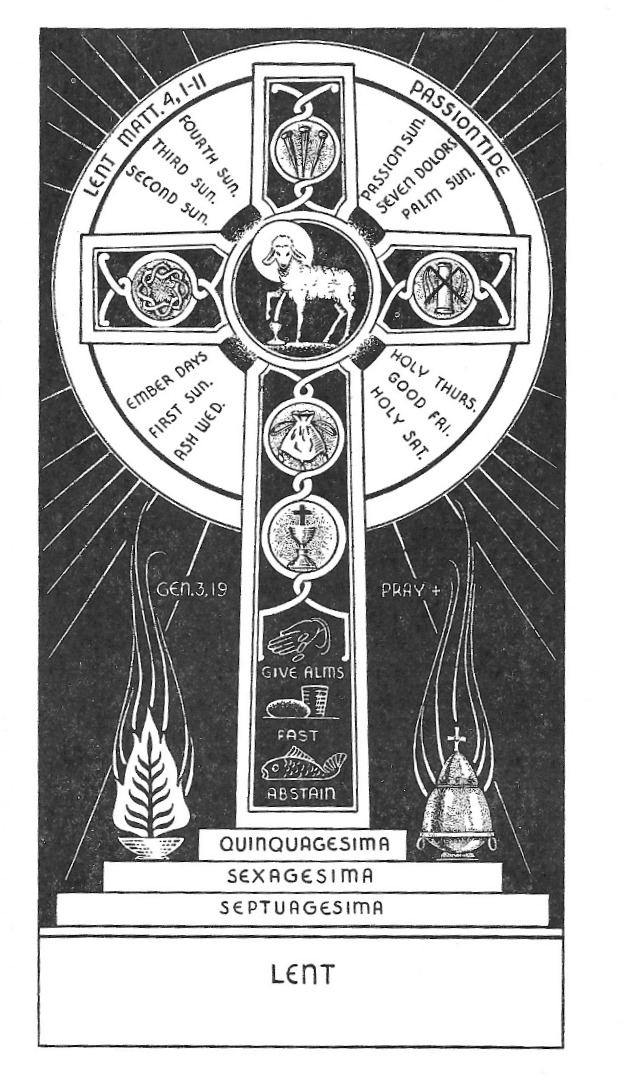
While not exactly 70 days before Easter—it's actually 63—the number is symbolic, representing the 70 years of exile the Israelites spent captive in Babylon after Solomon's Temple was destroyed after the Jewish-Babylonian War. The three Sundays of the Septuagesima season— Septuagesima, Sexagesima ("sixtieth") and Quinquagesima ("fiftieth")—are all named from their numerical reference to Lent, which is called Quadragesima ("fortieth"). The 40 days of Lent—which, again, end up being 46 days—are symbolic of the 40 days Jesus spent in the desert before He began His public ministry.

Septuagesima is considered a pre-Lenten opportunity to get our spiritual ducks in a row and prepare ourselves mentally and spiritually for the (hopefully) earnest sacrifices and repentance that Lent brings. Or, rather, used to bring. Obligatory Lenten sacrifices got notoriously more lenient after Vatican II, which also did away with the entire season of Septuagesima, sadly. But nothing says we can't kick our spiritual practices up a notch and dive head first into this penitential season with gusto. In fact, "con gusto"  in Spanish literally means "with pleasure", and isn't that how we do things for our Beloved Lord? We practice mortification, sacrifice, and ascesis with pleasure for the One we love.

As Dom Prosper Gueranger says in The Liturgical Year, 

The words Quinquagesima, Sexagesima, and Septuagesima, tell us of the same great Solemnity as looming in the distance, and as being the great object towards which the Church would have us now begin to turn all our thoughts, and desires, and devotion.

Now, the Feast of Easter must be prepared for by a forty-days’ recollectedness and penance. Those forty-days are one of the principal Seasons of the Liturgical Year, and one of the most powerful means employed by the Church for exciting in the hearts of her children the spirit of their Christian Vocation. It is of the utmost importance, that such a Season of grace should produce its work in our souls, — the renovation of the whole spiritual life. The Church, therefore, has instituted a preparation for the holy time of Lent. She gives us the three weeks of Septuagesima, during which she withdraws us, as much as may be, from the noisy distractions of the world, in order that our hearts may be the more readily impressed by the solemn warning she is to give us, at the commencement of Lent, by marking our foreheads with ashes.
Babylon and Jerusalem

There are two times: one which is now, and is spent in the temptations and tribulations of this life; the other which shall be then, and shall be spent in eternal security and joy. In figure of these, we celebrate two periods: the time ‘before Easter,’ and the time ‘ after Easter.’

That which is ‘ before Easter,’ signifies the sorrow of this present life; that which is ‘after Easter’ the blessedness of our future state.

Hence it is, that we spend the first in fasting and prayer; and in the second, we give up our fasting, and give ourselves to praise.”

--St Augustine, Enarrations; Psalm clviii

According to the tradition and teaching of the Church, the interpreter of the Sacred Scriptures, these two times of St. Augustine correspond to two places: Babylon and Jerusalem.

Dom Prosper Gueranger explains:

Babylon is the image of this world of sin, in the midst whereof the Christian has to spend his years of probation; Jerusalem is the heavenly country, where he is to repose after all his trials. The people of Israel, whose whole history is but one great type of the human race, was banished from Jerusalem and kept in bondage in Babylon. Now, this captivity, which kept the Israelites exiles from Sion, lasted seventy years; and it is to express this mystery, as Alcuin, Amalarius, Ivo of Chartres, and all the great Liturgists tell us, that the Church fixed the number of Seventy for the days of expiation.

...

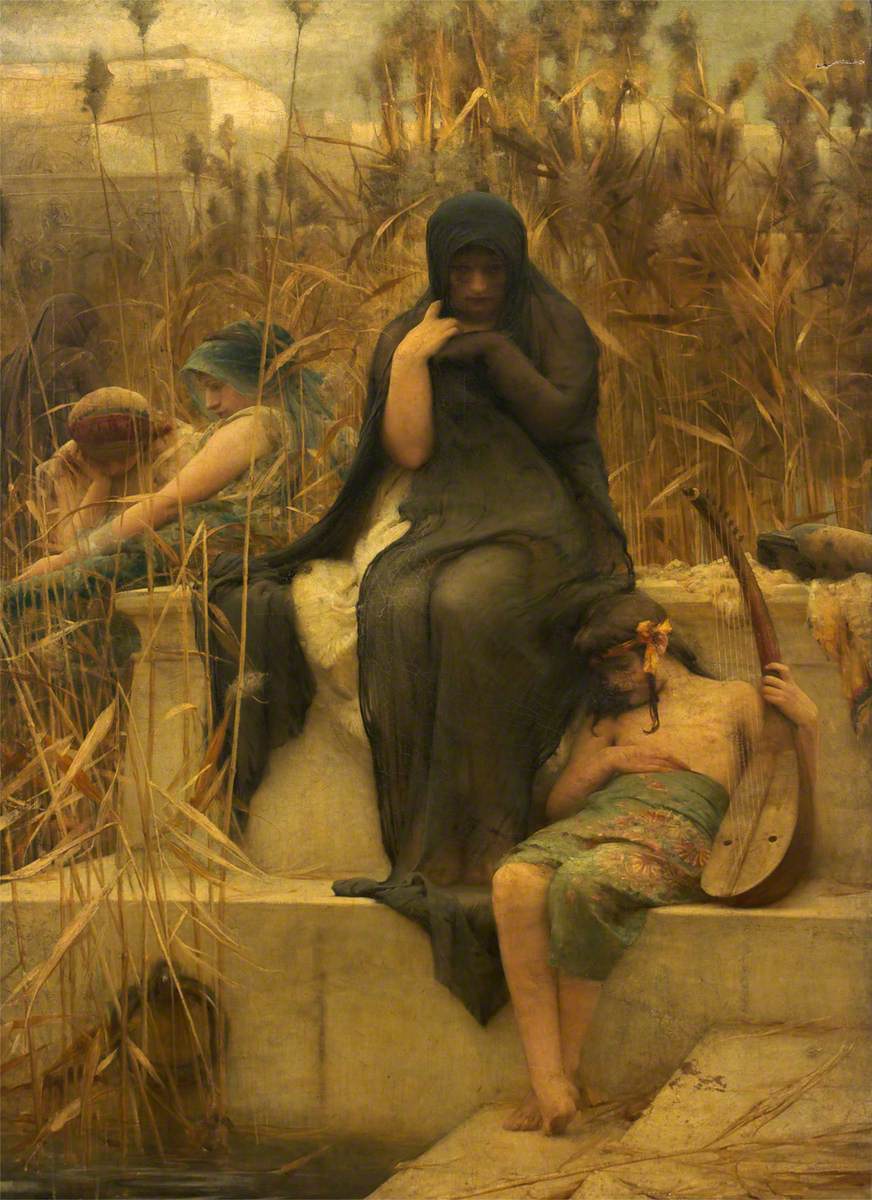
We are sojourners upon this earth; we are exiles and captives in Babylon, that city which plots our ruin. If we love our country, — if we long to return to it, — we must be proof against the lying allurements of this strange land, and refuse the cup she proffers us, and with which she maddens so many of our fellow captives. She invites us to join in her feasts and her songs; but we must unstring our harps, and hang them on the willows that grow on her river’s bank, till the signal be given for our return to Jerusalem. (Psalm 115) She will ask us to sing to her the melodies of our dear Sion: but, how shall we, who are so far from home, have heart to ‘sing the Song of the Lord in a strange Land’? (Psalm 136) No, there must be no sign that we are content to be in bondage, or we shall deserve to be slaves for ever.

These are the sentiments wherewith the Church would inspire us, during the penitential Season, which we are now beginning. She wishes us to reflect on the dangers that beset us, dangers which arise from our own selves, and from creatures. During the rest of the year, she loves to hear us chant the song of heaven, the sweet Alleluia; but now, she bids us close our lips to this word of joy, because we are in Babylon. We are ‘pilgrims absent from our Lord’ (2 Cor 5:6); let us keep our glad hymn for the day of his return. We are sinners, and have but too often held fellowship with the world of God’s enemies; let us become purified by repentance, for it is written that ‘praise is unseemly in the mouth of a sinner’. (Ecclesiasticus 15:9)
Burying the Alleluia

One of the ancient practices that coincided with Septuagesima was the burying of the Alleluia. People literally buried the printed word, "Alleluia". We in Apostoli Viae are reviving this beautiful practice, a symbolic act tied to a spiritual reality. Today at our headquarters, the Our Lady of Mount Carmel Retreat center, there will be prayer and the burying of the Alleluia at the beginning place of the stations of the cross. All faithful Catholics and all professed to Apostoli Viae are encouraged to take up this practice. You can find a sign maker on Etsy to make you one out of metal (wood deteriorates too quickly underground - especially in rainy Alabama), or you can make your own. This can be especially beautiful, coupled with a family activity of teaching with children.

"Alleluia" is last sung at First Vespers of Septuagesima. We don't hear it at all during Lent until The Easter Vigil on Holy Saturday. Why? Because we are going into exile... as we read in Psalm 137:

By the rivers of Babylon—
 there we sat down and there we wept when we remembered Zion.
On the willows there
 we hung up our harps.

For there our captors
 asked us for songs,
and our tormentors asked for
mirth, saying,
 “Sing us one of the songs of Zion!”

How could we sing the LORD’s
   song in a foreign land?

If I forget you, O Jerusalem,
 let my right hand wither!
Let my tongue cling to the roof of my mouth,
 if I do not remember you,
if I do not set Jerusalem
 above my highest joy.

Although the word "Alleluia" means "praise the Lord", and we can and should praise the Lord in all times of our lives—no matter if they be happy or sad, difficult or carefree—the Church has deemed it appropriate to bury the Alleluia during the Septuagesima and Lenten season so that when we celebrate the Resurrection, the sound of the Alleluia rings in our ears with a joy appropriate for the occasion.

How can we sing the Lord's song in a foreign land?
 

So many feel that Lent comes quickly and ends in a flash, giving them barely time to give any thought to their Lenten practices and mortifications. This blessed season of Septuagesima gives us that and so much more.

It sets a somber, mournful scene, gives us time to enter into the penitential spirit of the Church, to grow in holy fear of God, think on our sins and how we have hurt the One who loves us most, recognize our need for His mercy, and give thanks for the gift that is our salvation, brought about by the spilling of His Sacred Blood.

This holy season reminds us that this world is not out home, that we, too, are exiles in a vale of tears, and that, someday, we hope to join our Lord in the New Jerusalem, where we can sing the Lord's song, with a hearty and heartfelt

Alleluia.
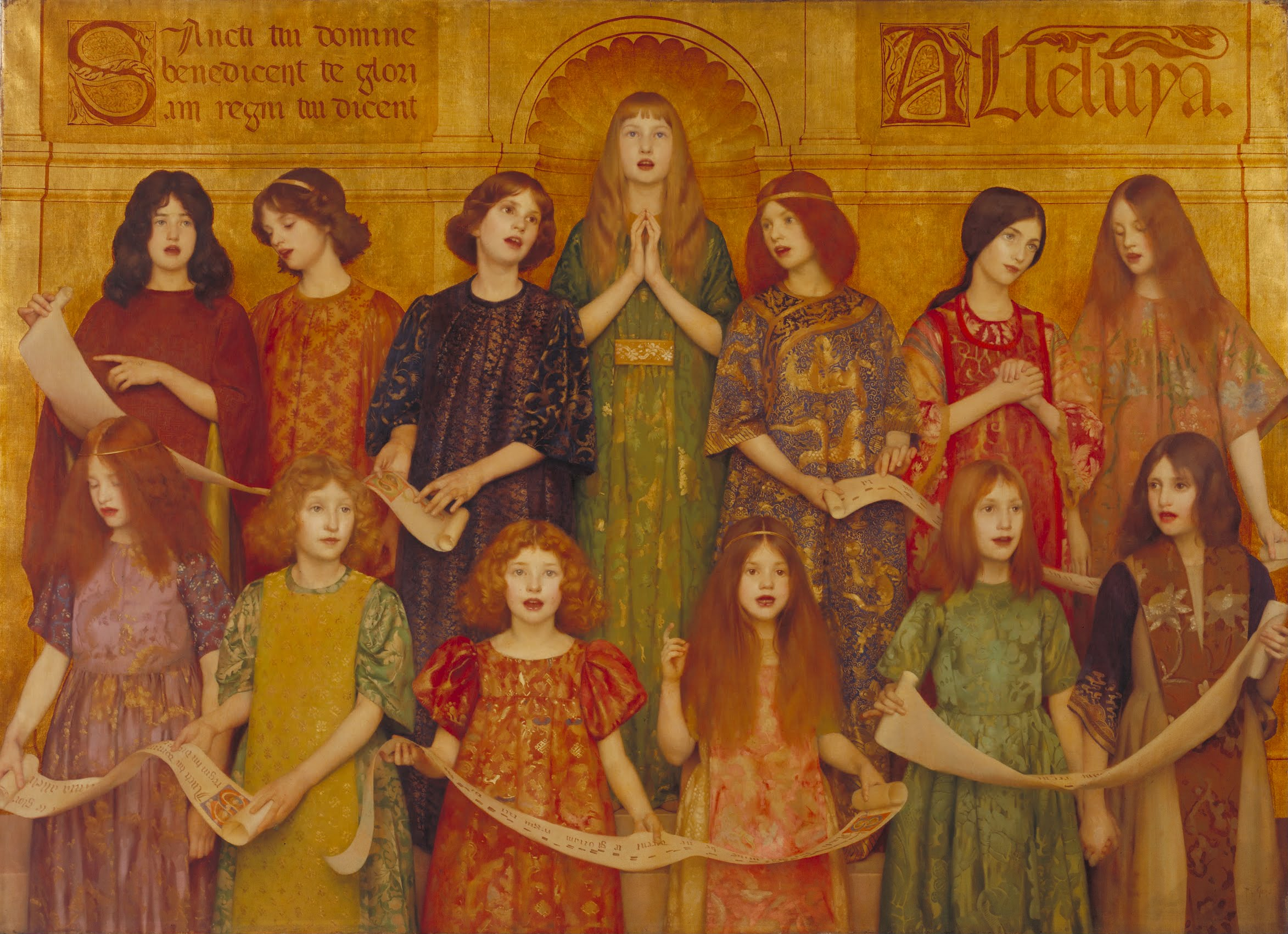
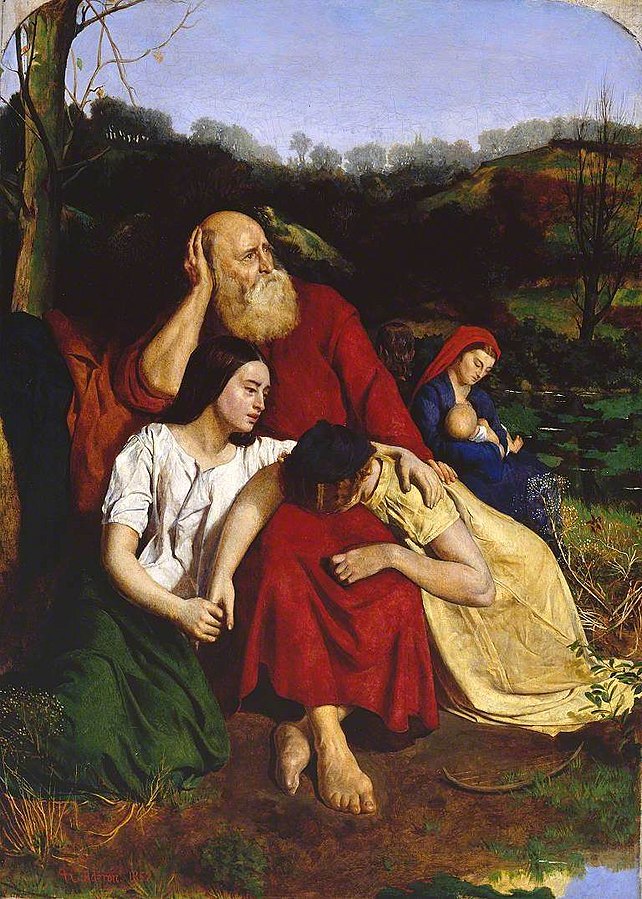
Image: The Mourning Jews in Exile, Eduard Bendemann; By the Waters of Babylon, Arthur Hacker (1858–1919); Philip Hermogenes Calderon (1833-1898), By the Waters of Babylon; Thomas Cooper Gotch 1854–1931, Alleluia, c. 1896 (all images in public domain)

Community tags

This content has 0 tags that match your profile.

Spiritual Life

The Church

Comments

To view comments or leave a comment, login or sign up.

Related Content

147
In the Desert with Jesus and Mary
Today, we begin our journey following Jesus into the desert.   Can you imagine?   He was just baptized in the Jordan, when, suddenly, the Holy Spirit led Him into the desert. He looks back and beckons. Not with His hands. Just a look.   Come.   We set out, uncertain, but not entirely.  We know Who we're following, after all. We trust Him. We thank God for Septuagesimatide. It's nice to prepare for an outing like this. But there is no other outing like this. How can we prepare? By shutting our minds to the distractions. By pulling away from the world. By centering ourselves in Him.   The walk through the desert is arduous. The sun is hot. We knew this walk wouldn't be easy. But God has a way of making His yoke manageable. Thank Him for the breeze that cools the brow. The farther we move, the quieter it becomes.  There are no birds here to sing.  It's so quiet, you can almost hear the sun sizzling in the sky. The sand baking. The sound of sandals dig, dig, dig into the sand. The walk itself becomes meditative. The sound of our feet has a rhythm that quiets the mind. We are going deep into the heart of God's creation to find Him there; Him and nothing more.  What more could we ever need? What more could we ever want? Our Lord is there, waiting for us.   Imagine. We leave behind the notifications, tings, rings, beeps and boops. Leave behind the music that bores itself into our consciousness and haunts our subconscious; the videos and tv shows that usurp valuable chunks of our memories with less-than-holy images and ideas.  Here in the desert, we don't need to, nay, we can't even concern ourselves with what we're going to eat. There's no food here to obsess over or gorge on mindlessly. Here, we must rely on Our Heavenly Father to feed us with the sweet bread of everlasting life. Gone are the comfy and soft blankets and pillows that cushion our comfortable lives. Gone are the heaters and fans and air conditioners that keep us all at a comfortable level of temperature.  Why are we so afraid of being uncomfortable? This walk isn't that bad. We are at the mercy of God now. In the desert. His mercy is everlasting.   A dark night of the senses. Forty of them. We shut them down to hear Him better. To follow Him better. Leave behind the baggage of the senses, of the memory, and the wounds and scars. Follow Him into the desert. Will you?   But without all that baggage we carry around each day...  What do we do with our time? What do we do with our memories? Our monkey thoughts?   We focus. Focus them on God. Focus on His will. On His word. What a simple time.   Can you see it? Can you imagine?   Our Lady has joined us in the desert, as well, but her retreat is spiritual. She is with Jesus in her mind, in her heart. She is always close to Him. Watching. Praying. Our Lady of Silence. She speaks only when necessary, so that she can better hear the promptings of the Holy Spirit. She holds all things in her heart. All things worth keeping, that is. Her heart has no room for anything that is not of God. Why do ours? Why do we make room for anything else?   She knows the journey that we're on and she prays for us. She knows, in the desert, we will be closer to Him than ever before.   Let us ask for her help as we make our way and follow the only Leader we should ever know. Let us ask the Father...   Loving Father, I seek nothing more than to please You and grow closer to You. Purify my heart and my intentions this Lent, Heavenly Father. Bring me closer to You, to Your Son. Prepare a place in my heart and home for silence and solitude, so I can hear Your voice and know Your will for me. Help me fast from the things that threaten the health of my soul and body, which keep me attached to this world, and which create noise to prevent me from hearing and knowing You. Enlarge my heart so I can be generous, like Zacchaeus. Open my eyes, so I can see, like Bartimaeus. Open my ears, like you did for the deaf man. Heal me, like You healed the paralytic. Dispel the demons that surround me, as you did for the Gerasene. Bring me back from death, as You did to Lazarus. I seek nothing but Your will, Lord. I know that I can do all things in You.     Image: Christ in the Wilderness, by Ivan Kramskoy (c. 1872, public domain), with icon of Our Lady of Silence (artist unknown)
11
Tenebrae: Descending into Darkness
Tenebrae factae sunt—and it was dark (Mt. 27:45).  Before the revision of the celebration of Holy Week in 1955, the Church traditionally chanted Tenebrae during the three days leading up to Easter, known as the Sacred Triduum. This dramatic ceremony was sung during the hours in darkness—hence its name, as Tenebrae is translated from the Latin for “darkness” or “shadows”. Tenebrae consists of Matins and Lauds sung on Maundy Thursday, Good Friday, and Holy Saturday. While the old rubrics do not specify when Tenebrae should be sung, traditionally, it was sung so that it would end around Midnight, leaving the church and participants in total darkness. However, with the 1955 revision of holy week, Tenebrae disappeared, and later, after Vatican II, Matins became the Office of the Readings. Recently, however, many churches are bringing back the tradition in a variety of forms. Some sing the hours the evening before—so Wednesday night, they’ll sing the hours for Thursday morning. Other churches celebrate Tenebrae early in the morning, and some sing it in English, as opposed to the original Latin. While the liturgical rules for celebrating Tenebrae are complicated, and many of us are unable to witness Tenebrae being sung, we can still take the ideas behind it and use it to prepare ourselves for the holiest days of the Christian year. Some have described Tenebrae as a sad and mournful funeral service for Jesus. Those who have attended a funeral service of late will note that there are many consolations peppered throughout the service. The hope of Heaven. The hope of seeing our loved ones there some day. The hope of the Resurrection. This hope is absent from Tenebrae. The psalms, lessons, and chants (or polyphony) sung during the Tenebrae services are filled with grief and sadness. There is no joy or hope here; no blessings, Gloria Patris or Te Deums. Tenebrae is sorrowful, from beginning to end. The Lamentations of Jeremiah are sung—songs of lament composed after the destruction of Jerusalem and the beginning of the Babylonian captivity.  “The Lamentations have received a peculiar distinction in the Liturgy of the Church in the Office of Passion Week. If Christ Himself designated His death as the destruction of a temple, “he spoke of the temple of his body” (John 2:19-21), then the Church surely has a right to pour out her grief over His death in those Lamentations which were sung over the ruins of the temple destroyed by the sins of the nation.” –catholic encyclopedia The Matins part of Tenebrae is broken up into three nocturns—each with three Psalms, a versicle and response, the Our Father, and readings. During the Lauds section, there are five psalms, a versicle and response, the Benedictus, Our Father, and a reflection on the death of Christ.  Before the congregation, stands a triangular candelabra—called a Tenebrae hearse—with 15 candles, all lit. After the reading of each Psalm, a candle is extinguished, starting from the bottom and moving up, alternating sides. The candles are said to symbolize the Disciples, with the topmost candle representing Christ. As each candle is extinguished, we recall how Christ’s Disciples deserted Him during His Passion, one by one. Some say the remaining three candles represent the three Marys who stood by the Cross. After the final lesson, the final candle is removed and placed on the altar, symbolizing Jesus’ suffering and death on calvary. It is then hidden, representing His burial. At this point, the celebrants make loud noises—called the strepitus—by banging books on pews or stomping their feet. This noise signifies the earthquake, confusion, and terror that accompanied Christ’s Crucifixion. The noise stops and the candle reemerges, its light as fair as ever.  The office then comes to an abrupt end, and the participants leave the Church in silence. Dom Prosper Gueranger says,  “Let us now learn the meaning of these ceremonies. The glory of the Son of God was obscured and, so to say, eclipsed, by the ignominies He endured during His Passion. He, the Light of the world, powerful in word and work, Who but a few days ago was proclaimed King by the citizens of Jerusalem, is now robbed of all his honors. He is, says Isaias, the Man of sorrows, a leper (Isaias 53:3,4). He is, says the royal prophet, a worm of the earth, and no man (Psalm 21:7). He is, as He says of himself, an object of shame even to his own disciples, for they are all scandalized in him (Mark 14:27) and abandon Him; yea, even Peter protests that he never knew Him. This desertion on the part of His apostles and disciples is expressed by the candles being extinguished, one after the other, not only on the triangle, but on the altar itself. But Jesus, our Light, though despised and hidden, is not extinguished. This is signified by the candle which is momentarily placed on the altar; it symbolizes our Redeemer suffering and dying on Calvary. In order to express His burial, the candle is hidden behind the altar; its light disappears. A confused noise is heard in the house of God, where all is now darkness. This noise and gloom express the convulsions of nature when Jesus expired on the cross: the earth shook, the rocks were split, the dead came forth from their tombs. But the candle suddenly reappears; its light is as fair as ever. The noise is hushed, and homage is paid to the Conqueror of death.” Below are links to Tenebrae packets you can use to celebrate Tenebrae at home, as well as links to Tenebrae services that you can livestream, followed by psalms and music that will help you enter into this holiest of seasons. Have a blessed Triduum. Links to Watch Tenebrae this Sacred Triduum: St John Cantius Tenebrae 2022 Schedule Spy Wednesday, April 13th - 7:30 pm CDT - Sung Tenebrae - Link to live stream. Holy Thursday, April 14th - 8:30 am CDT - Simplified Tenebrae - Link to live stream. Good Friday, April 15th - 8:30 am CDT - Simplified Tenebrae - Link to live stream. Holy Saturday, April 16th - 8:30am CDT - Simplified Tenebrae - Link to live stream.   St Mary’s on Broadway, Rhode Island Tenebrae 2022 Schedule  Holy Thursday, April 14th - 7:30 am ET - Link to live stream Good Friday, April 15th - 7:30 am ET - Link to live stream Holy Saturday, April 16th - 7:30am ET - Link to live stream   Tenebrae Booklets Pre-1955 Resources (in Latin) A recommendation from Corpus Christi Watershed (in Latin) English Triduum at Home (in English) Tenebrae booklet from St. Patrick’s Cathedral, Parramatta (English) Tenebrae according to the use of the Cathedral Basilica of St Louis (English/Latin) Tenebrae Booklet from St John Cantius (English) English Tenebrae Booklet   A Virtual Tenebrae Using this booklet and the videos below, you can have a virtual Maundy Thursday Tenebrae Service in your home. Let the music transport you to the foot of the Cross:   First Nocturn Psalm 68 Psalm 69 Psalm 70 Lectio 1: Lamentations, Book 3, Lamentation 1: Incipit Lamentatio Jeremiae Prophetae, Palestrina Responsory 1: In Monte oliveti oravit ad patrem Pater si fieri potest, Carlo Gesualdo Lesson II, Vau, Et egressus est, Victoria Responsory 2: Tristis est anima mea, Carlo Gesualdo Responsory 3: Ecce Vidimus Eum Second Nocturn Psalm 71 Psalm 72 Psalm 73   Responsory 4: Amicus Meus Osculi, Victoria Responsory 5: Judas Mercator Pessimus, Victoria Responsory 6: Unus ex Discipulis Meis, Victoria Third Nocturn Psalm 74 Psalm 75 Psalm 76 Responsory 7: Eram quasi Agnus Innocens, Gesualdo Responsory 8: Una Hora non Potuistis Responsory 9: Seniores Populi Consilium, Gesualdo   At Lauds Psalm 50 Psalm 89 Psalm 35   Canticle of Moses, Psalm 39 Psalm 146 Benedictus Christus Factus Est Miserere Mei, Allegri     Image: pixabay
