
Pope Leo in Constantinople: Littleness, Love, and the Battle for the Human Heart
Pope Leo in Constantinople: Littleness, Love, and the Battle for the Human Heart
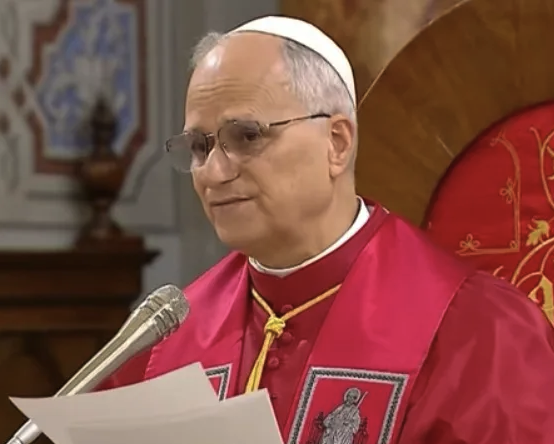 This is Pope Leo’s first apostolic journey, and on Friday 28 November he spoke in the Cathedral of the Holy Spirit in Istanbul to the Catholic Christians of Turkey.
Let me declare an interest. I have found the years since my reception into the Catholic Church difficult in the years of the previous papacy. When Leo was elected my heart entertained the possibility of hope, the hope of being able to love, honour and respect both the pope and his office. In the months that have followed, we have all been on tenterhooks wondering who God had given us. I have tried to see the best in him. I have tried to interpret his words without fear, threat, or paranoia. And I believed I saw a great goodness and above all the great love of Jesus.
I have no doubt that being fully human, Pope Leo will make mistakes, take decisions I would have preferred not taken, and actions I may not fully understand. But what I most need in a pope is someone who knows, understands and loves Jesus. And in this visit to what I prefer to call Constantinople, I found we had such a pope.
As I listened to him in this Istanbul cathedral, I found myself loving the pope, loving Jesus in him, thanking God for the presence of the Holy Spirit that so clearly emanated from our Holy Father in God.
Immersed in the febrile politics of the Church, we have been consumed with power struggles, political innuendo, theological tribalism, and the death grip of our own hidden and occluded anxieties. As I listened to the pope speak to persecuted Catholics in Turkey, people who have paid a very high price for loving Jesus and remaining faithful to the See of Peter, I found myself loving what he brought to the world stage in the name of Jesus.
In my semi-suspended optimism up until this point, I have been accused by people more frightened of the future than I am, of “popesplaining.” I do not mind the accusations. But what I want to do is celebrate a pope who truly loves Jesus, deeply loves His Church, honours our Lady, Theotokos (first so called in Ephesus, Turkey), and the little ones, the members of the body of Christ, who hold the faith.
I thought we might pay our pope the compliment of listening to what he actually said in the Cathedral of the Holy Spirit, rather than what others say about him.
The Pope’s Opening Gesture: Rooting the Journey in Salvation History
Most of us like to establish our credentials, our provenance when we speak: where our journey began, how far our memory stretches, how long we have been doing this.
The pope, speaking in the name of the Catholic Church reached back to Abraham, sent out from Ur of the Chaldees, and then from “the region of Harran in the south of Turkey he left for the promised land” (Genesis 12.1).
“Why is Turkey important?” he asked. The covenant journey began with Abraham, but soon “in the fullness of time, after Jesus’ death and resurrection, the disciples came to Anatolia, Turkey. In Antioch, where St Ignatius was later bishop, they were called Christians for the first time” (Acts 11.26). From that city St Paul began some of his apostolic journeys. It was likewise in Ephesus, on the shores of the Aegean, that John the beloved disciple lived and died. Turkey is a foundational part of the earliest memory of the childhood of the Church.
Why does this matter? The history of Turkey should cause us to reflect where we have come to as Christians in the 21st century.
It is a history of miracle and tragedy. It is a reminder that in part through our frailty, we have betrayed the faith of our fathers. Christian schisms in the Near East significantly weakened the social, political, and theological cohesion of the Christian world just before and during the rise of Islam. This did not “cause” Islam, but it created conditions that made Islamic expansion easier and Christian resistance far less unified.Asia Minor used to be the heart-throb of the early Church, and it has been surrendered to the power of Islam and the replacement of the God and Father of Jesus Christ by a very different, darker, prophetic figure.
In reminding us of this, the pope also reminded us that Jesus is Lord of history. This is the antidote to our fear and failure. Jesus is the antidote to all that breaks in the human heart. But before we can reach out to him in deeper trust, we need to recognise our failure.
Nicaea still asks us: Who is Jesus for us? What does it essentially mean to be a Christian?
The great struggle between Islam and Christianity is the archetypal struggle between power and love. Mohammed is the prophet of power. Jesus the Son of God is the incarnation of love. Across the skin of the earth, in the constant tension between Islam and Christianity, power and love meet in perpetual struggle, and the prize is the human heart.
Put like this, the outcome is clear. The human heart was made for Jesus, not for power. Though we lust after control and security, God has placed in us an even deeper hunger for his love, his forgiveness, his mercy, and the kindness of his eyes.
Littleness: The Virtue the Future Requires
The human heart was made for Jesus, not for power.
For those who remember Cardinal Ratzinger’s prophetic warning, he reminded us that the Church would be stripped of much of its weight, size, and influence, and would have to learn a new mode of being: littleness. Leo echoed him.
Speaking to a small, fragile, and at times frightened community of Catholics in Turkey, he said:
“When we look with God’s eyes, we discover he has chosen the way of littleness, descending in our midst. This is the way of the Lord, which we are all called to bear witness.”
Incarnation is the abandonment of control. When we think of the journey from the glory of heaven into the vulnerability of flesh folded into history, we remember that God is not afraid of powerlessness or littleness. Jesus walked the earth with nothing in his hands but blessing and nothing in his heart but the power to forgive sins and raise the dead. The power of Christianity is in inverse proportion to its capacity to control.
We, by contrast, often react to fear by reaching for the levers of control instead of falling to our knees in prayer. Littleness is the theological virtue that corrects us.
Pope Leo said:
“The Church’s true strength does not lie in her resources or structures, or in the fruits of her mission depending on numbers, economic power or social influence. The Church lives by the light of the Lamb.”
He encouraged his listeners to cultivate confident hope, rooted in union with God, and to witness with joy. And he reminded them that the young have begun to tire of materialism’s false promises, and are turning back to ask questions of those who live by the Lamb’s light.
Turkey as the Land of the Councils: A Strategic Spiritual Gesture
The pope then turned to the significance of Turkey as the land of the first eight ecumenical councils. It was an elegant move.
He then offered three challenges: to his audience of brave faithful Catholics; to the Orthodox clergy present; to the Turkish dignitaries; and to a world audience curious to know what the successor of Peter had to say in Asia Minor, in the 21st century.
Challenge One: Who Is Jesus for Us?
Christianity is not the story of man’s search for God but of God’s search for man.
The pope returned to the paradigm of power versus love and anchored it in the Creed of Nicaea.
“The Creed is not simply a doctrinal formula; it is an invitation to seek a different sensibility, a spiritual horizon… Nicaea still asks us: Who is Jesus for us? What does it essentially mean to be a Christian?”
Religion is often misunderstood as the pursuit of a dogma inflicted on others. Christianity is nothing of the sort. It is the pursuit of a relationship. Who is Jesus for us? The way love triumphs over power is through falling in love with Jesus. Evangelism achieves little by telling people what they must believe; it achieves much by finding the right questions: How do we bear being human? How do we distinguish evil from good? How do we overcome evil with good?
Everything flows from: Who is Jesus for us?
Challenge Two: Rediscovering the Face of the Father
The pope reminded his audience that Nicaea affirmed the full divinity of Jesus:
“In Jesus we find the true face of God and his definitive word about humanity and history.”
This challenges every human idea of God that does not correspond to Christ’s revelation. Every religion except Christianity emerges from the human mind and its spiritual chemistry. Christianity alone is God breaking in from outside.
As C. S. Lewis wrote:
“If Christianity were something we were making up, of course we could make it easier. But it is not made up… Christianity claims to give an account of facts, to tell you what the real universe is like…
Christianity is not the story of man’s search for God but of God’s search for man.”
This leads to the pope’s warning about the return of Arianism. Arianism demotes Jesus, relieving the human mind of the paradox of God and man united in one person. In doing so, it robs us of the power of the Cross to save.
Leo said that a new Arianism is present today whenever Jesus is admired as a merely human figure, a moral teacher, or a prophet, but not worshipped as the living God.
“Nicaea reminds us that Jesus Christ is not a figure of the past; he is the Son of God, present among us, guiding history.”
This matters enormously. Jesus is not a second-level authority. He is the voice of God the Father placed close to our ear and even closer to our heart.
Challenge Three: Translating Faith into Culture
The third challenge is translation: how we translate our relationship with Jesus into the cultures in which we live.
The pope reminded us that even the Creed itself received a renewed formulation at Constantinople. The lesson:
“The Christian faith must always be expressed in the languages and categories of the culture in which we live.”
He then invoked St John Henry Newman. One of the great arguments of the present moment is the extent to which some attempt to disguise fundamental doctrinal change by calling it development. Newman made crystal clear that no development is legitimate unless it is organically continuous with the original deposit. Development never becomes contradiction.
Those who feared Leo might be captured by progressivism should take comfort. He said:
“Its development is organic, that of a living reality gradually bringing to light and expressing more fully the essential heart of the faith.”
A Fisherman’s Image
He concluded with the image used by John XXIII, who watched fishermen on the Bosphorus working through the night in all weathers: perseverance, trust, labour, fidelity in the dark, waiting for dawn.
Pope Leo offered the same encouragement: to remain faithful, to work, to trust, and to allow Jesus to guide history.
What he brought to Turkey was not a visit high on diplomacy and sophisticated politicking, but a spiritual strategy for the renewal of the Church and the Faith.
There are few better ways than giving our attention to his three questions:
- Who is Jesus?
- How do we discover the face of our Father?
- How do we translate the faith into culture without deforming it?
This is the means by which the Church may be reinvigorated by the glory of her past and grow more confident in God’s plans for her present.
Our pope, in returning to Nicaea, confronted both the triumphs and the failures of the Church, and offered Christ’s little ones in Constantinople hope, clarity, and courage to witness to God’s mercy in the present and trust his promises for the future. Once free of the preoccupations of politics we can return to the roots of why we are Christians and recover our vision for the Kingdom.
“The Church instead lives by the light of the Lamb; gathered around him, she is sent out into the world by the power of the Holy Spirit. In this mission, she is constantly called to trust in the Lord’s promise: “Do not be afraid, little flock, for it is your Father’s good pleasure to give you the kingdom” (Lk 12:32).
You can find more of Gavin's work here: Dr. Gavin Ashenden's Substack


Comments